We now support Meta Muse Spark. Track your Spark prompts

Free | 18 sessions on demand | English and German

Rankscale AISummer Camp 2026

Case studies, live AI visibility audits, experiments you can copy, and practical playbooks for closing your PR, content, and SEO gaps in AI search. Recorded with our partners, free to watch.

All sessions

Jump to any recording. Each card links to recap notes and timestamped takeaways you can use right away.

1

How Search and Retrieval in LLMs Actually Work

Coalition Technologies

ENabout 56 min
2

Myths About AI Search: On-Page Content & Code

Coalition Technologies

ENabout 56 min
3

Myths About AI Search: Off-Page Signals

Coalition Technologies

ENabout 46 min
4

Creating Content That Gets Cited by AI Search Engines

SEOcation

DEabout 43 min
5

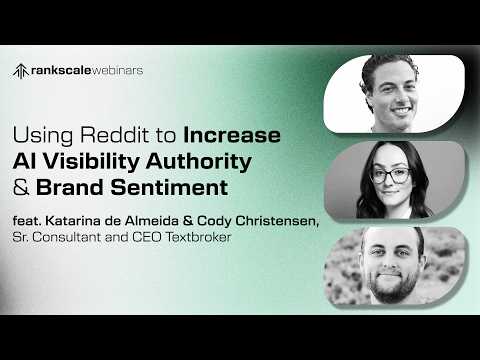
Using Reddit to Increase AI Visibility, Authority & Brand Sentiment

Textbroker

ENabout 60 min
6

Impact of Third-Party Validation & The Guest Post Comeback

Spyndle

ENabout 28 min
7

From Manual Work to Automations: Claude Code x Rankscale REST API & MCP

Bojan Basrak

ENabout 54 min
8

Live Audit of a Brand's AI Search Visibility

Saltanat Labs

ENabout 50 min
9

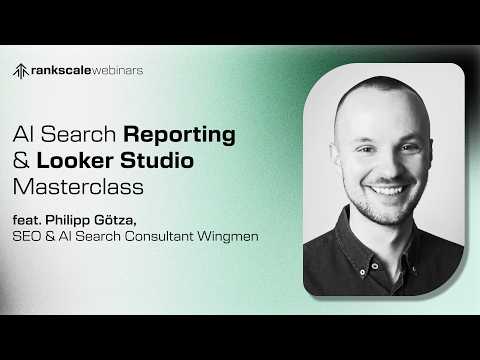
AI Search Reporting & Looker Studio Masterclass

Wingmen

ENabout 39 min
10

Looking at AI Search Data From a Different Perspective: Input for Product & Branding

Rasheed Badawi

ENabout 41 min
11

Das (fast) perfekte Prompt-Set: hilfreiche Ansätze und typische Fallstricke

Otago

DEabout 51 min
12

From Audit to Action: How AI Search Feeds Into Your Go-to-Market Framework

ScratchMM

ENabout 43 min
13

Award-Winning GEO Case Study: Most Innovative Campaign

Search Engine Results

ENabout 36 min
14

ChatGPT Recommends Your Competitors: Insights From User Behaviour

Neuroflash

ENabout 47 min
15

Local SEO im Zeitalter der KI-Suche

Black Sheep Agency

DEabout 49 min
16

Habits That Make You Win AI Search

Rankscale AI

ENabout 43 min
17

How AI Search Feeds Into Your Go-to-Market: From Audit to Action

Blue Moon

DEabout 49 min
18

How LinkedIn Content Impacts & Increases AI Visibility

Verto Digital

ENabout 49 min

Watch and take the insights.

Open any recording, review the key moments, and apply the playbooks to your own AI visibility work.

1

How Search and Retrieval in LLMs Actually Work

Coalition Technologies

ENabout 56 minOn demandWatch on YouTube
Thumbnail for Rankscale AI Summer Camp Session 1: How Search and Retrieval in LLMs Actually Work
Key insights from Session 1

Recap: Rankscale AI and Coalition Technologies test whether training data or live web search decides which brands AI recommends, using an established US bridal brand across Gemini, Claude, and GPT-5.

  • 9:30: Branded prompts look fine either way. The brand scored 100% with and without web search. The real difference shows on non-branded prompts.
  • 16:12: Web search can wipe out an established brand. With web search on, non-branded visibility dropped sharply, sometimes to 0%, because the brand had no content for those prompts.
  • 13:10: Training-data answers barely cite. GPT-5's five citations without web search were hallucinated. With web search, answers link evidence, but misattribution still happens.
  • 17:21: Sentiment freezes at the training cut-off. Negative product reviews in the months before one model's cut-off left the brand at 58% sentiment a year later.
  • 20:54: Web search is a content meritocracy. It narrows the field: brands with content tailored to the prompt gain, broad brands without it collapse. Publish or be replaced.
  • 24:34: More posts is not more coverage. 98 off-topic blog posts did nothing; a smaller competitor with two targeted posts won the answer.
  • 27:12: The year in the URL is a recency signal in the query fan-out.
  • 39:32: Self-promotional listicles backfire. Google uses them as a source but drops your brand and recommends the competitors you listed.
2

Myths About AI Search: On-Page Content & Code

Coalition Technologies

ENabout 56 minOn demandWatch on YouTube
Thumbnail for Rankscale AI Summer Camp Session 2: Myths About AI Search: On-Page Content & Code
Key insights from Session 2

Recap: Fourteen on-page and technical myths tested with Rankscale AI data and Coalition client work, from bottom-line-up-front copy to llms.txt.

  • 3:51: Your own site still matters. Owned pages earned over 70% of citations on informational and transactional prompts; reviews and user content take over in the consideration phase.
  • 7:39: Put the answer up front. 45% of AI references come from the first 30% of a page.
  • 11:20: Changing only the date is risky. Some LLMs fall for it, but Google spots cosmetic refreshes, and Google still drives most AI search traffic. Update the content, not just the date.
  • 14:54: Question-style H2 and H3 headers get cited more, because they mirror the sub-queries engines run. FAQs per product page work too.
  • 22:12: Data beats prose. Statistics and sources are the strongest lever for citations; a facts page keeps AI from mixing your brand up.
  • 25:27: Mass AI content rises, then collapses in Google. Use AI to assist, keep people editing.
  • 37:05: Do not lock crawlers out. Check robots.txt, server-side blocks, and your CDN defaults, and get indexed in Google, Bing, and Brave.
  • 49:58: Grounding pages are low effort and high upside. A facts sheet put a food delivery client back into ChatGPT answers that went to local grocers. llms.txt costs ten minutes and does not hurt.
3

Myths About AI Search: Off-Page Signals

Coalition Technologies

ENabout 46 minOn demandWatch on YouTube
Thumbnail for Rankscale AI Summer Camp Session 3: Myths About AI Search: Off-Page Signals
Key insights from Session 3

Recap: Eleven off-page myths about YouTube, Wikipedia, links, Reddit, and reviews, and which ones still hold in AI search.

  • 0:30: Small YouTube videos get cited. Over 40% of AI-cited videos have under 1,000 views; long-form beats Shorts, and the text description matters most.
  • 5:32: You do not need Wikipedia. Rankscale AI has no Wikipedia page; it helps most with reputation management.
  • 9:53: Distribution beats the perfect article. The same article on a third-party news site went from an 8% to a 34% citation rate.
  • 14:15: Brand mentions beat backlinks 3 to 1. Domain authority does not predict citations, and do-follow versus no-follow barely matters.
  • 19:47: You do not need the classic top 10. Fan-out sub-queries have no search volume and are easy to rank for.
  • 23:12: Reddit is the most cited domain, but astroturfing gets you banned. Give value nine times before you promote once.
  • 28:13: 62% of citations are ghost citations: your page is cited, your brand is not named.
  • 34:41: Review volume and stars do not move rankings; being on trusted review sites and what reviews say does. Claim your G2 and Capterra profiles.
4

Creating Content That Gets Cited by AI Search Engines

SEOcation

DEabout 43 minOn demandWatch on YouTube
Thumbnail for Rankscale AI Summer Camp Session 4: Creating Content That Gets Cited by AI Search Engines
Key insights from Session 4

Recap: How to build content around customer problems instead of product features, and how to find content gaps with Rankscale AI and classic SEO tools.

  • 0:41: Start from the problem, not the features. People buy solutions; content that only lists features does not get cited.
  • 6:40: Study competitors to find what is missing, such as a packing video nobody has made yet, not to copy them.
  • 12:19: Combine three sources to pick topics: Rankscale AI Prompt Research, Google search volume, and the questions your support team hears every day.
  • 9:29: Only write where you are the expert. Skip topics you have no first-hand experience with.
  • 21:21: Write snippet-ready content: paragraphs of about 200 words, bullet points, plain language, jargon explained, and sources named; plan video and social alongside.
  • 25:23: Show a real expert with a face and a tip. In a world of AI content, visible human experience builds trust.
  • 33:27: Track mentions, not just citations, with prompt clusters for competitors, your brand, and your products.
  • 34:37: Digital PR with your own data builds links and brand at the same time.
5

Using Reddit to Increase AI Visibility, Authority & Brand Sentiment

Textbroker

ENabout 60 minOn demandWatch on YouTube
Thumbnail for Rankscale AI Summer Camp Session 5: Using Reddit to Increase AI Visibility, Authority & Brand Sentiment
Key insights from Session 5

Recap: What 30,000 AI citations tracked in Rankscale AI say about when Reddit matters, followed by Textbroker's white-hat playbook for Reddit.

  • 11:01: Reddit is not only for consideration prompts. 56% of Reddit citations sit there, but 21% and 23% come from informational and transactional prompts.
  • 11:27: It depends on your vertical. Reddit drives discovery for photo frames, validation for bridal wear, and in 10 verticals it was never cited at all. Check yours first.
  • 12:03: Not just ChatGPT. Google and Perplexity value Reddit citations heavily too.
  • 23:18: Cited threads are small and specific. Many are years old with a median of 9 upvotes, and head-to-head comparisons beat best-of threads.
  • 13:43: Reddit changes how you are described. The words AI uses for a brand differ a lot depending on whether Reddit is cited.
  • 15:52: What no longer works: automated posts, dropping your brand into old cited threads, and astroturfing. Reddit now blocks millions of inauthentic votes a day.
  • 32:03: What works: posts that lead with the answer, genuinely helpful comments, and AMAs once you have built credibility in the community.
  • 46:45: Case study: 3x more AI citations, sentiment up 19 points, and AI Overview presence from 19% to 58%.
6

Impact of Third-Party Validation & The Guest Post Comeback

Spyndle

ENabout 28 minOn demandWatch on YouTube
Thumbnail for Rankscale AI Summer Camp Session 6: Impact of Third-Party Validation & The Guest Post Comeback
Key insights from Session 6

Recap: Lessons from hundreds of guest articles placed for about 50 B2B SaaS brands over 14 months, and why guest posting is back as a high-ROI AI visibility tactic.

  • 1:47: Mentions beat links. Brand mentions predict AI visibility about three times better than backlinks, and third-party sources make up 85 to 88% of B2B SaaS citations.
  • 4:03: One placement pays three times: the contextual mention, a do-follow backlink, and direct conversions.
  • 7:16: Positioning decides everything. AI recommends on consensus, so every source must tell the same story: what you are, who it is for, what you replace, and why you are better.
  • 11:07: Pick one product category. 94% of SaaS tools show up in only one category in AI recommendations.
  • 13:17: Challengers win by being specific, like Descript owning easy podcast editing against Adobe.
  • 17:38: Niche sites win. 81% of ChatGPT citations for tool recommendations point to independent niche blogs and vendor content. Vet for trust and real traffic, then choose on relevance.
  • 20:03: Match the article format to the prompt: honest fact-based listicles, comparisons, how-tos, and answers to painful questions mined from sales calls.
  • 5:44: Result: 280K in pipeline for an AI sales startup from long-tail prompts found in sales call transcripts.
7

From Manual Work to Automations: Claude Code x Rankscale REST API & MCP

Bojan Basrak

ENabout 54 minOn demandWatch on YouTube
Thumbnail for Rankscale AI Summer Camp Session 7: From Manual Work to Automations: Claude Code x Rankscale REST API & MCP
Key insights from Session 7

Recap: How to connect Rankscale AI to Claude through the MCP, and when the REST API is the better choice for reports and deeper analysis.

  • 0:53: The MCP takes minutes to connect as a custom connector in Claude. It is read-only today; write access is coming.
  • 4:08: MCP for quick answers, API for real analysis. The MCP works in normal chat without terminal access; the API shines in Claude Code, Codex, or Cursor.
  • 36:06: The API is far more efficient on big pulls, while the MCP is slightly cheaper on simple questions.
  • 18:36: Build the reports the dashboard cannot, such as your brand rank by visibility per topic and per engine, or visibility weighted by how much each engine matters to you.
  • 25:30: Find outreach targets in seconds: the top cited domains for a topic and engine where your brand is missing.
  • 27:52: Merge duplicate competitor entities before you report, for example a brand and its product listed separately.
  • 39:13: Consistency research: average AI answer consistency was about 30%, the top pick is fairly stable, and results settle after 5 to 10 runs.
8

Live Audit of a Brand's AI Search Visibility

Saltanat Labs

ENabout 50 minOn demandWatch on YouTube
Thumbnail for Rankscale AI Summer Camp Session 8: Live Audit of a Brand's AI Search Visibility
Key insights from Session 8

Recap: A live AI search audit of Driven, a Belgian AI sales commission startup, across six engines and 20 real buyer prompts.

  • 5:00: AI now picks the shortlist. After a conversation of seven or eight messages, it names two to four brands. The goal is to be on that list.
  • 7:30: Measure four things: presence and position, share of voice, framing and sentiment, and sources and citations.
  • 19:41: Split branded from non-branded. Driven was found in about 82% of branded answers but only about 5% of non-branded ones.
  • 24:36: The citations report is your plan. Branded sources are hygiene to keep accurate; non-branded sources are your campaign target list.
  • 25:13: Optimise for the engines your buyers actually use. Ask your customers which ones.
  • 32:46: SEO is still the foundation: thin informational content, far fewer ranking keywords than competitors, and toxic backlinks all held Driven back.
  • 37:08: Road map: answer-shaped pages, G2 and Capterra profiles, a comparison hub, and a link clean-up first; topical authority, case studies, and Reddit next.
  • 43:00: Export the search terms to see the exact adjectives AI uses for you and for each competitor.
9

AI Search Reporting & Looker Studio Masterclass

Wingmen

ENabout 39 minOn demandWatch on YouTube
Thumbnail for Rankscale AI Summer Camp Session 9: AI Search Reporting & Looker Studio Masterclass
Key insights from Session 9

Recap: How to attribute and report AI search results, build custom dashboards in Rankscale AI, and pipe the data into Data Studio (Looker Studio).

  • 1:26: Four attribution paths: AI referral clicks, branded search lift, direct traffic lift, and self-reported attribution, which shows far more than referrals do.
  • 3:43: The reporting pyramid: the board gets non-branded visibility and a competitor leaderboard, the marketing lead gets funnel, engine, and sentiment trends, practitioners get full access and Scout recommendations.
  • 8:49: Fewer metrics, more context. Anchor every number to a competitor your leadership cares about, and always add the next action.
  • 10:57: Frame the story by stage: invisible brands lead with detection rate, early traction with the visibility trend, leaders with top-three visibility.
  • 13:13: Four dashboards to build: funnel health, niche dominance, engine gap, and scenario proof.
  • 14:36: Custom dashboards start from templates and can be shared as read-only links with locked filters.
  • 28:47: Data Studio setup: API key plus brand ID, and set the timestamp to Date (not Date Hour) for all three data sources; your IT team may need to allow the connector.
10

Looking at AI Search Data From a Different Perspective: Input for Product & Branding

Rasheed Badawi

ENabout 41 minOn demandWatch on YouTube
Thumbnail for Rankscale AI Summer Camp Session 10: Looking at AI Search Data From a Different Perspective: Input for Product & Branding
Key insights from Session 10

Recap: How AI search data becomes input for product, brand, and PR teams, not just for SEO.

  • 4:01: Five hidden signals in every AI answer: how you are framed, how accurate it is, whether it nudges buyers to switch, whether you are absent, and where you are strong.
  • 9:52: Few teams look. Only 14% of marketers track AI search as a channel and 16% of brands check how AI portrays them.
  • 13:07: Build prompts in five themes: discovery, positioning, comparison, reputation, and fact-check.
  • 22:06: Read competitor sentiment as an X-ray of their strengths and weak spots.
  • 25:48: Validate themes with demand: check search volume for brand plus theme and Google Trends.
  • 27:59: Your site is only about 10% of citations. Align PR, social, product, brand, and email on one message.
  • 38:55: Do not ignore negative sentiment. Address it openly, or it sticks in the training data.
  • 35:00: Start small: a six-number scorecard and two insights routed to other teams per quarter.
11

Das (fast) perfekte Prompt-Set: hilfreiche Ansätze und typische Fallstricke

Otago

DEabout 51 minOn demandWatch on YouTube
Thumbnail for Rankscale AI Summer Camp Session 11: Das (fast) perfekte Prompt-Set: hilfreiche Ansätze und typische Fallstricke
Key insights from Session 11

Recap: How to build a near-perfect prompt set in Rankscale AI, from topics to individual prompts to regular quality checks.

  • 0:41: Like a weather forecast: prompt tracking is never exact, but it shows the direction. A good set reflects what is relevant to you and simulates how people really search.
  • 10:41: Group prompts into topics of 5 to 30: brand, brand comparison, and generic topics, with tags for funnel stage or persona.
  • 13:09: Report visibility on generic topics only. Branded prompts always name you and inflate the number.
  • 15:21: Use tracking prompts, between a short keyword and a long one-off user question, phrased so a brand is likely to be named.
  • 20:52: Prompt anatomy: modifier (best, cheapest) + core keyword + use case + location + audience. Add the country to stop getting another market's results.
  • 24:23: No push-button prompt set. AI speeds it up, but you need judgment and real data: Search Console, Bing's AI Performance report, People Also Ask, sales, and support.
  • 31:11: Skip query fan-outs when building the set; they happen after the prompt, not before.
  • 40:43: Quality check: export the search terms, deactivate prompts that never name a brand, and read the follow-up questions AI suggests.
12

From Audit to Action: How AI Search Feeds Into Your Go-to-Market Framework

ScratchMM

ENabout 43 minOn demandWatch on YouTube
Thumbnail for Rankscale AI Summer Camp Session 12: From Audit to Action: How AI Search Feeds Into Your Go-to-Market Framework
Key insights from Session 12

Recap: Treat AI engines as an intermediary you market to, and use the AI search audit to inform your whole go-to-market, not just SEO.

  • 4:40: Traffic is flat, but AI visitors convert better because they arrive better informed.
  • 8:24: Do not optimise for LLMs, market to them, the way you would to a channel partner.
  • 9:12: One audit, many teams: brand benchmarking, content, PR, ecosystem partners, and sales battle cards all draw on it.
  • 13:32: Let product marketing own the prompts to avoid wishful-thinking prompts.
  • 16:30: Competitor sentiment becomes a battle card and input for switch campaigns.
  • 19:24: Bucket your citation sources (media, communities, business intelligence, ecosystem, review sites) and invest only where your buyers are.
  • 23:38: Measure brand and pipeline separately: visibility, sentiment, and topics on one side, LLM referrals and conversions on the other.
  • 34:06: For an established category, start with category prompts and the buying criteria AI lists.
13

Award-Winning GEO Case Study: Most Innovative Campaign

Search Engine Results

ENabout 36 minOn demandWatch on YouTube
Thumbnail for Rankscale AI Summer Camp Session 13: Award-Winning GEO Case Study: Most Innovative Campaign
Key insights from Session 13

Recap: The six-step method behind two award-winning GEO campaigns: Longfonds, a Dutch lung health nonprofit, and Bouwmaat, a Dutch building materials wholesaler.

  • 3:12: Use today's AI Overview as your briefing: match what it covers, then beat it with your own expertise and data.
  • 5:30: Six steps: baseline, scrape the AI answers, rewrite, structure, bulk upload, follow-up.
  • 7:00: Start from People Also Ask: scrape it across the keyword set, sort by cumulative volume, cluster by category, and bulk upload to Rankscale AI via CSV.
  • 12:17: One question, one URL, one H1, all linked to a pillar page.
  • 19:28: Longfonds: 14 rewritten symptom pages earned more clicks and longer engagement, without ever giving medical advice.
  • 20:08: Bouwmaat: 45,000+ impressions, 800+ clicks, and a 1.4% CTR in six weeks, paying back the project; wood category visibility rose from 11.7% to 38%, ahead of the long-time leader.
  • 22:59: Rankscale AI caught a drop Search Console never showed; shorter answers fixed it.
  • 24:32: Lessons: measure before publishing, report per platform, keep human editing, and publish in batches per category.
14

ChatGPT Recommends Your Competitors: Insights From User Behaviour

Neuroflash

ENabout 47 minOn demandWatch on YouTube
Thumbnail for Rankscale AI Summer Camp Session 14: ChatGPT Recommends Your Competitors: Insights From User Behaviour
Key insights from Session 14

Recap: How one speaker grew his share of AI mentions from 3.7% to 17.4% in four months, and what 52,000 citations reveal about what gets cited.

  • 2:27: Different audiences see different brands for the exact same query.
  • 7:30: From 3.7% to 17.4% share on the top 100 tracked queries after moving the site from WordPress to fast static HTML, worth over 10K in revenue.
  • 8:22: A weekly loop: measure in Rankscale AI, pull the data via the API into Claude Code, improve titles and content, redeploy.
  • 13:38: Real prompts are short: about 11 words on average, not the 30 an AI invents; classic short keywords are under 10% of queries.
  • 35:00: The biggest factor by far: a passage that semantically matches the question. Next: words from the query in the title, then the domain type, with video platforms on top.
  • 38:27: What helps: FAQ schema (about 43% citation lift), the answer near the top, concrete numbers and dates, recent publication.
  • 40:41: What does not: backlinks, question-style headings, lists and tables, and overly long body text.
  • 44:13: Invest in video: cut your recordings into YouTube videos.
15

Local SEO im Zeitalter der KI-Suche

Black Sheep Agency

DEabout 49 minOn demandWatch on YouTube
Thumbnail for Rankscale AI Summer Camp Session 15: Local SEO im Zeitalter der KI-Suche
Key insights from Session 15

Recap: Local SEO in the age of AI search for single and multi-location businesses, from the Google Business Profile to local landing pages.

  • 5:12: Your Google Business Profile is an online branch, not a business card.
  • 9:59: Ask Maps changed local search in March 2026. Gemini now answers local questions from profile data such as attributes, opening hours, and links, so set every attribute to yes or no.
  • 14:00: Name each location with city and street so Google does not merge them.
  • 16:03: Reply to every review. Review and reply text counts as user content that matches searches.
  • 20:57: Keep your data identical across directories. Syncing alone lifted some clients' visibility by over 40%.
  • 21:26: The AI gap: of businesses in the local pack, about 11% are recommended by Gemini and only 1.3 to 2% by ChatGPT.
  • 23:57: Local landing pages need a keyword set by search intent, FAQ sections, LocalBusiness schema, and unique content for every location.
  • 34:14: Check every page with Page Audit V2, build prompts per location with Prompt Research, and optimise for the engine that favours you.
16

Habits That Make You Win AI Search

Rankscale AI

ENabout 43 minOn demandWatch on YouTube
Thumbnail for Rankscale AI Summer Camp Session 16: Habits That Make You Win AI Search
Key insights from Session 16

Recap: The operating rhythm that turns AI search from a one-off project into a system, with named owners and fixed cadences.

  • 0:52: Name an owner: a GEO lead plus contributors for SEO and readability, content, and PR and entity. One person can wear all the hats.
  • 1:51: Five cadences: weekly execution, biweekly priorities, a monthly ROI report, new sub-queries every two months, and a quarterly review of engines, prompts, and paid placements.
  • 3:43: Start with a responsibility brief: baseline, monetary target, primary and secondary engine, prompt group in focus.
  • 14:41: Track money prompts first, plus branded why and why not prompts per persona, and sanity-check every prompt on its first run.
  • 20:25: Use a seven-day baseline; a single run is only a snapshot.
  • 22:13: Every week: fix access issues, close three content gaps, triage three third-party citations.
  • 30:58: Every two weeks: flag any prompt that drops 10 points.
  • 33:11: Every month: report against the first baseline month, not last month; watch competitor ads in ChatGPT and your hosting provider's policy emails.
17

How AI Search Feeds Into Your Go-to-Market: From Audit to Action

Blue Moon

DEabout 49 minOn demandWatch on YouTube
Thumbnail for Rankscale AI Summer Camp Session 17: How AI Search Feeds Into Your Go-to-Market: From Audit to Action
Key insights from Session 17

Recap: Leon and Mark Lucas of Blue Moon show how an AI visibility audit in Rankscale AI turns into concrete PR, product, sales, and content actions.

  • 6:48: B2B buyers already ask AI: over 90% use AI to find products or vendors, 88% found a new vendor that way, and over 80% say AI shaped the final decision.
  • 10:11: Local is wide open: only about 1.2% of local businesses get recommended by ChatGPT.
  • 12:38: Two ways into an answer: training data and web grounding. The secondary sources behind grounding are the part you can influence.
  • 15:43: Track core prompts, not every phrasing: different wordings with the same intent lead to the same answer.
  • 20:13: Sentiment feeds the whole company: what AI says about you becomes input for PR, product, and sales arguments.
  • 23:16: Use competitor framing to sharpen switch narratives and objection handling.
  • 24:45: Sort citations by funnel stage, then fix wrong data on third-party product pages and comparison portals first.
  • 26:45: Reddit matters less in Germany: only 6.6% of their citations, and ChatGPT has cut Reddit citations by up to 80% since August.
  • 33:02: ChatGPT Ads only reach free accounts, so treat them as a test for B2B, not a channel.
  • 34:30: GEO moves fast: changes show up within 24 hours, against five to six months for classic SEO.
  • 45:05: llms.txt has no confirmed use by the major AI platforms.
  • 46:18: A grounding page that explains who you are helps when your brand name is common.
18

How LinkedIn Content Impacts & Increases AI Visibility

Verto Digital

ENabout 49 minOn demandWatch on YouTube
Thumbnail for Rankscale AI Summer Camp Session 18: How LinkedIn Content Impacts & Increases AI Visibility
Key insights from Session 18

Recap: Why LinkedIn has become a top source for AI answers and how to use Rankscale AI to find the topics, formats, and profiles that win LinkedIn citations.

  • 6:51: LinkedIn is now a top-cited source: across all major models it ranks among the top sources in 14 of 16 B2B categories.
  • 8:15: Why it works: real, verifiable experts with a work history are strong E-E-A-T signals.
  • 9:36: AI is shifting from anonymous platforms to high-trust platforms where you can see who wrote it.
  • 13:17: People beat company pages: 75% of LinkedIn citations come from personal profiles, mostly members with 2k to 5k followers and from every seniority level.
  • 16:02: Pick topics from your own data: sales calls, BDRs, and product people know what buyers actually ask.
  • 17:41: Use 7 to 10 prompts per topic, branded and non-branded.
  • 18:31: Agree on the same terms per topic and repeat them across the website, LinkedIn, and every other channel.
  • 19:46: Run at least ChatGPT, Gemini, and Copilot, collect about 8 runs over a month, then filter citations for LinkedIn to see which topics trigger LinkedIn posts.
  • 21:08: Recheck every two months; the pattern shifts.
  • 23:37: Use stable clusters and trend comparisons to avoid overreacting to one-off spikes.
  • 24:31: Export Top URLs to see the exact LinkedIn posts cited per prompt.
  • 26:16: Pulse URLs are LinkedIn articles; public groups get cited too, private ones cannot.
  • 27:46: What gets cited: service reviews, clear opinions, product tests, and comparisons, the same formats that work on your website.
  • 30:19: Top brands by mentions shows who wins LinkedIn citations for your topics, including new players you never tracked.
  • 33:38: Build the trust stack: brand, then employees, then independent creators, then customers as the strongest signal.
  • 35:09: Consistency beats volume: start with two posts a week, use collaborative posts, keep posts under 300 words, turn longer pieces into articles, and a series into a newsletter.
  • 39:00: Document repeatable post structures that map to buyer questions so the team can sustain output.
  • 39:29: Case: an ABM article by Verto Digital's in-house expert ranks in the top three sources in AI Overviews and gets picked up by Copilot.
  • 42:38: Measure and refresh: a post lives about a week on LinkedIn, but AI picks it up in week two and Google in week four.
  • 44:25: Update data every three months and export the full prompt data from Rankscale AI to see how the post is used in answers.

Structured course

Want the structured course? The free AI Search Bootcamp.

Open the Bootcamp

Put the insights to work on your own brand.

Track the prompts that matter, benchmark against competitors, and turn insights into weekly action.